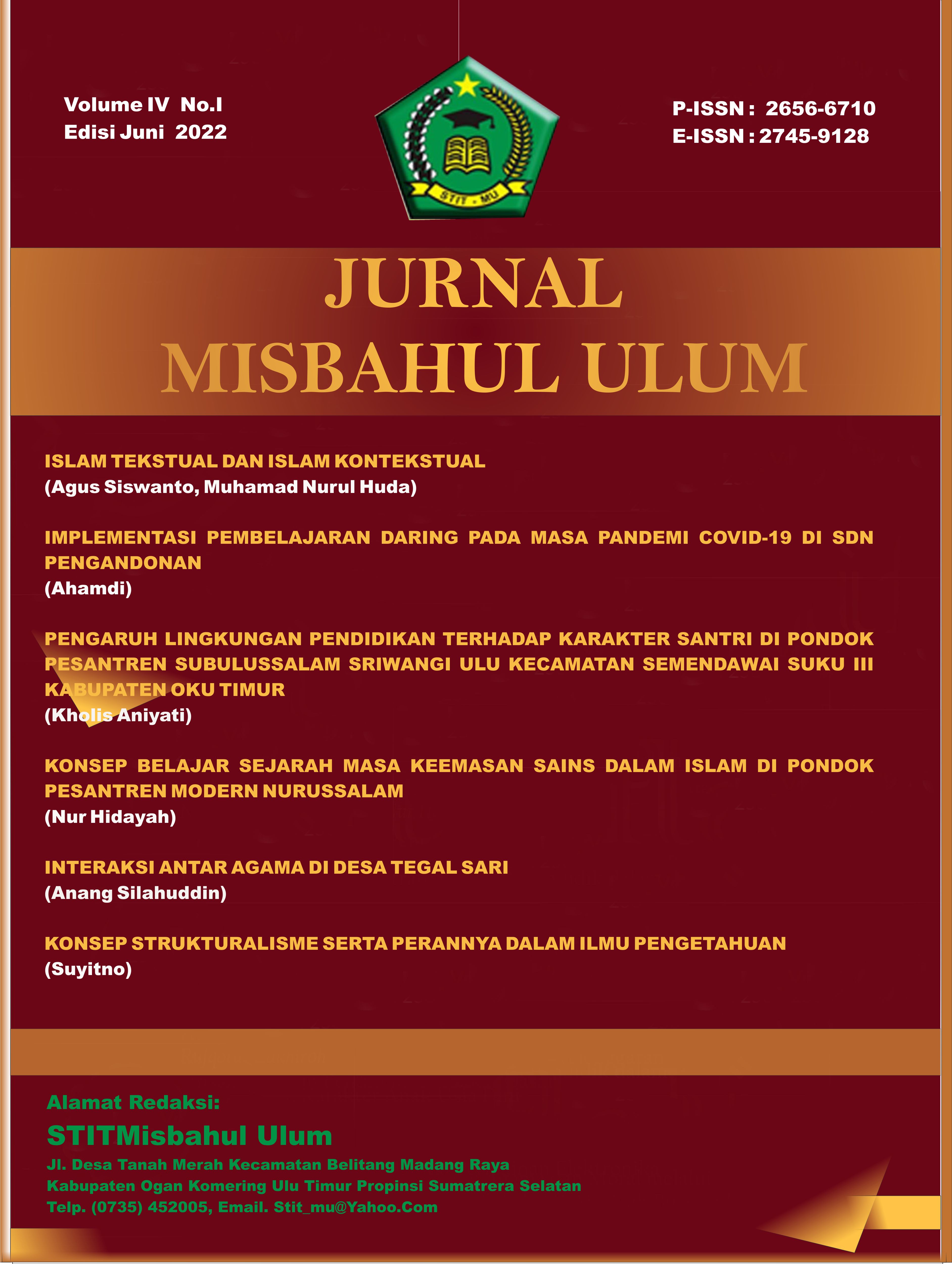
Pembelajaran Daring Pada Masa Pandemi Covid-19 Di SDN Pengandonan
DOI:
https://doi.org/10.70688/misbahululum.v4i1%20Juni.211Keywords:
online learning, OVID-19 pandemic, supporting factors, inhibiting factorsAbstract
This study aims to analyze how the learning process during the COVID-19 pandemic was carried out online, and also reviewed the factors that are obstacles in the process. SDN Pengandonan was the place for this research to be held during Maret 2021. The research used qualitative research with a phenomenological design. Data collection techniques using questionnaires and interviews. The subjects used in this study were several teachers at SDN Pengandonan. The results of this study indicated was the learning at SDN Pengandonan was using the WhatsApp group and google doc applications. Offline learning was also implemented while adhering to health protocols. As for the factors that support online learning at SDN Pengandonan, the availability of mobile phones, quotas, stable, networks and textbooks. While the inhibiting factors for online learning were include teachers who cannot explain optimally, The interest and motivation of students, and economic factors.
References
Ahmadi, A. (2020). Konsep pendidikan akhlak tasawuf menurut Nurcholish Madjid dan relevansinya dengan pendidikan Islam. Al-Misbah: Jurnal Prodi PGMI, 6(1), 1–21.
https://jurnal.insanprimamu.ac.id/index.php/misbah/article/view/92
Alawiyah, F. (2013). Peran guru dalam implementasi Kurikulum 2013. Jurnal Aspirasi, 4(1), 65–74.
Bararah, I. (2017). Efektivitas perencanaan pembelajaran Pendidikan Agama Islam di sekolah. Jurnal Mudarrisuna, 7(1), 131–147.
Dewi, W. A. F. (2020). Dampak COVID-19 terhadap implementasi pembelajaran daring di sekolah dasar. Edukatif: Jurnal Ilmu Pendidikan, 2(1), 55–61.
Hadisi, L., & Muna, W. (2015). Pengelolaan teknologi informasi dalam menciptakan model inovasi pembelajaran (e-learning). Jurnal Al-Ta’dib, 8(1), 117–140.
https://doi.org/10.31332/atdb.v8i1.
Pane, A., & Dasopang, M. D. (2017). Belajar dan pembelajaran. Jurnal Kajian Ilmu-Ilmu Keislaman, 3(2), 333–352.
Purwanto, A., Pramono, R., Asbari, M., Santoso, P. B., Wijayanti, L. M., Hyun, C. C., & Putri, R. S. (2020). Studi eksploratif dampak pandemi COVID-19 terhadap proses pembelajaran online di sekolah dasar. Journal of Education, Psychology and Counseling, 2(1), 1–12.
Putra, N. (2013). Metode penelitian kualitatif pendidikan. Rajawali Pers.
Raco, J. R. (2010). Metode penelitian kualitatif: Jenis, karakteristik, dan keunggulannya. PT Gramedia Widiasarana Indonesia.
Riyana, C. (2019). Produksi bahan pembelajaran berbasis online. Universitas Terbuka.
Sari, P. (2015). Memotivasi belajar dengan menggunakan e-learning. Jurnal Ummul Quro, 6(2), 20–35.
Sugiyono. (2014). Memahami penelitian kualitatif. CV Alfabeta.
Sugiyono. (2015). Metode penelitian pendidikan (pendekatan kuantitatif, kualitatif, dan R&D). CV Alfabeta.
Suyono, & Hariyanto. (2016). Belajar dan pembelajaran: Teori dan konsep dasar. PT Remaja Rosdakarya.
Downloads
Published
How to Cite
Issue
Section
Categories
License
Copyright (c) 2022 Misbahul Ulum (Jurnal Institusi)

This work is licensed under a Creative Commons Attribution-ShareAlike 4.0 International License.